

Reflections: Bas Ek Chup Si Lagi Hai
Reflections: Bas Ek Chup Si Lagi Hai
 News Sense Team
 By A.I Sharada
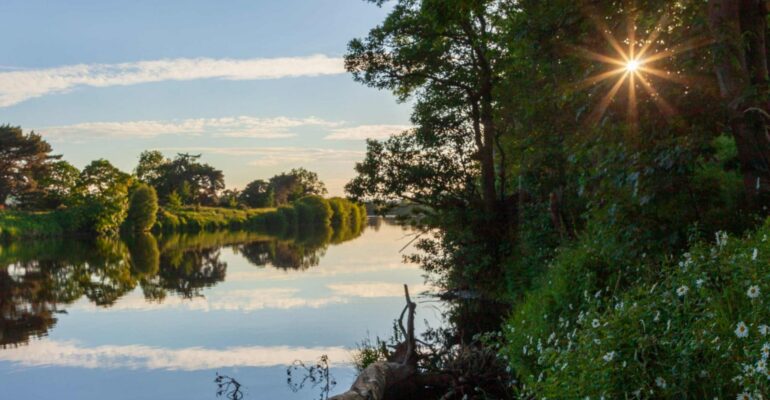
I was sitting on my balcony in the evening, watching the sun disappear behind colorful soft clouds. The weather was pleasant, the breeze gentle, and in the background my SAREGAMA was playing an old Hindi song, “Bas ek Chup Si Lagi Hai, Nahin Udaas Nahin.”
I have heard the song countless times before. But that evening, it was as though I had heard it for the first time.
The words stopped me in my tracks.
“Nahin udaas nahin…”
That was exactly how I felt.
Not sad. Not unhappy. Certainly not depressed. Just… quieter.
Over the past couple of years, I have noticed a subtle change in myself. It didn’t happen after a major event. There was no personal tragedy, no disappointment, no sudden awakening. It crept in quietly, almost unnoticed.
I have become less hyper, less restless, less driven by the need to constantly do something.
The world still interests me. Perhaps even more than before. But not in the way it once did.
Take travel, for instance.
There was a time when I would seize every opportunity to travel. A new place promised excitement, discovery and a welcome break from routine. Today, I am not sure I want to travel simply because a place is on my bucket list. I find myself thinking about the environmental cost of tourism, about fragile places struggling under the weight of irresponsible tourists, about whether one more trip is really necessary.
More importantly, I realise I would happily travel if it meant sharing the journey with someone I love. The destination has become less important than the companionship.
The same shift appears elsewhere.
If I have committed to attending an event and, at the last minute, the friends accompanying me cancel or unexpected guests arrive at home, I quietly cancel my plans. There is no irritation, no disappointment.
At first, I wondered if something was wrong with me.
Then I asked myself a simple question: if I don’t attend, what difference will it make?
The event will go on exactly as planned. The organisers will probably not even notice my absence.
Oddly, that thought doesn’t hurt me. It simply frees me from the feeling that I must be everywhere, doing everything.
I have noticed similar changes in the way I look at my possessions. Earlier, they represented milestones, achievements or aspirations. Today, they matter because of the stories they hold. An old cup, a book with handwritten notes, a piece of furniture inherited from a loved one—these have acquired a value no luxury purchase can match.
Relationships have changed too.
When we are younger, relationships often become intertwined with identity. We seek appreciation, validation and recognition, sometimes without even realising it. Today, I value the people with whom I can simply be myself. Relationships have become less about proving affection and more about experiencing acceptance. They do not need constant performance. They have a quiet permanence.
Perhaps this is also because life itself changes.
For nearly forty years, there was always something waiting to be done. Work, deadlines, meetings, family responsibilities, social commitments. I don’t remember having the luxury of sitting quietly and watching the world go by.
Now, life has slowed down. The children have lives of their own. There are no work related responsibilities. There are days when the calendar is empty. Instead of wondering how I will find time to do everything, I sometimes wonder what I should do with all this time. And that has given me something I never had before: the opportunity to simply observe.
And observation changes things.
People haven’t changed.
I have become more observant.
Standing on the sidelines, I find myself watching people, conversations, institutions and even myself with greater curiosity. I see how much of our lives is driven by habit, by social expectation, by the desire to appear successful, relevant or happy. I also notice extraordinary kindness, resilience and generosity that often pass unnoticed because they make no noise.
I sometimes wonder whether this quieter phase is simply what we call ageing?
Some might even interpret it as a mild depression because the excitement has diminished.
I don’t think either description is entirely accurate.
What if this is simply another stage of living that our modern vocabulary has forgotten how to describe?
The more I reflected on these changes, the more I found myself thinking about Vanaprastha.
For years, I thought of it as a stage of life when one slowly withdraws from worldly affairs. I am no longer sure that is what it means.
Maybe it is not about withdrawing from the world at all. Maybe it is about looking at the same world through different eyes.
You don’t stop caring. You don’t stop participating. But you are no longer swept away by everything that is happening around you. You begin to choose what deserves your time, your energy and your emotions. The world remains the same. Something within you has changed.
Looking back, I realise that for most of my life I was too busy participating to observe.
Perhaps this stage has given me the gift of distance.
The world has not become less interesting.
It has become interesting in a different way.
And perhaps that is what the song had understood all along.
“Bas yun hi chup si lagi hai…”
A quietness has settled in.
“Nahi udaas nahi”
Not sadness.
Not indifference.
Just a different way of being in the world.


