

Empowering Democracy Through Touch: How Braille Ballots Are Transforming Voting for the Visually Impaired in Eastern India
Empowering Democracy Through Touch: How Braille Ballots Are Transforming Voting for the Visually Impaired in Eastern India
 Joydeep Dasgupta
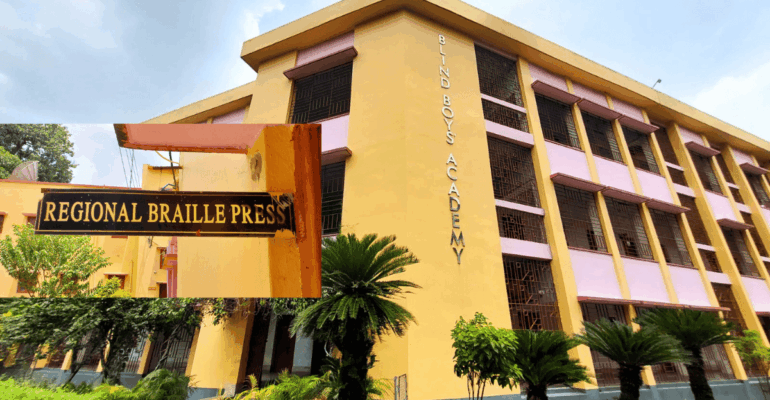
 In a significant stride toward inclusive democracy, the Ramakrishna Mission Narendrapur Regional Braille Press under Blind Boys Academy Narendrapur has once again demonstrated how innovation and commitment can uphold the fundamental right to vote for visually impaired citizens. Through the production of Braille ballots, the institution has enabled thousands of visually impaired voters to independently participate in elections marking a crucial shift from dependence to dignity.
This initiative, undertaken in collaboration with the Election Commission of India, has been steadily evolving over the years. Beginning with Parliamentary elections and later extending to Assembly elections across West Bengal and Northeastern states including Tripura, the project has now become a cornerstone of accessible electoral practices in the region.
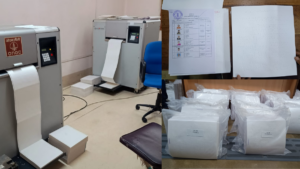 For the recent West Bengal Assembly elections, the scale and efficiency of the operation stood out. Out of 294 Assembly constituencies in West Bengal, the Ramakrishna Mission Narendrapur Regional Braille Press was entrusted with the responsibility of producing ballots for 183 constituencies. The timeline was tight between April 10 and April 17 yet the team successfully completed the entire process within the stipulated period, ensuring timely delivery for two phases of polling informed Arup Chatterjee, Manager of the Regional Braille Press.
This achievement reflects not only logistical capability but also a deep sense of responsibility. The ballots were meticulously prepared to mirror the standard ballot format, incorporating candidate names, party symbols, and sequence order exactly as mandated by the Election Commission. Importantly, the ballots were produced in both Bengali and English, ensuring accessibility across linguistic preferences.
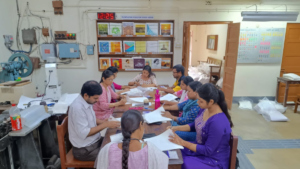 To maintain the highest standards of accuracy, the Election Commission deployed a dedicated oversight mechanism. The Disability Commissioner supervised the process, supported by a verification team of ten members including five visually impaired individuals. This inclusive verification model added an additional layer of credibility, as those directly benefiting from the initiative played a role in authenticating the output. Each ballot underwent rigorous scrutiny before receiving final approval, ensuring that visually impaired voters could rely on the system with confidence.
Historically, visually impaired voters often required assistance from companions at polling booths, raising concerns about privacy and autonomy. The introduction of Braille ballots has fundamentally altered this dynamic. Voters can now independently identify candidates and cast their votes without external support preserving both secrecy and self-reliance. This transition is not merely procedural, it represents a deeper commitment to democratic equality. By removing barriers to participation, the initiative aligns with broader efforts to make elections more inclusive and representative.
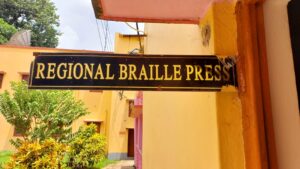 The Narendrapur Braille Press stands out as one of the oldest and most technologically advanced facilities of its kind in Eastern India. Beyond election materials, it has also undertaken significant projects such as publishing the Indian Constitution in Braille, further expanding access to knowledge and rights for visually impaired individuals.
Guided by the ideals of Sri Ramakrishna, Sri Maa Sarada Devi and Swami Vivekananda’s of “Service to man is Service to God,” the institution continues to position itself as a pioneer in accessible communication. Its dedicated staff and modern infrastructure have enabled it to consistently deliver high-quality outputs under demanding conditions.
The Election Commission’s continued emphasis on accessibility reflects a broader institutional commitment to inclusivity. By encouraging persons with disabilities to actively participate in what is often described as the “festival of democracy,” such initiatives help strengthen the legitimacy and reach of the electoral process.
As Swami Mahananda, Principal of the Blind Boys Academy, highlighted, this work is not just about ballots it is about empowering individuals to exercise their constitutional rights with dignity. The successful execution of the Braille ballot project stands as a testament to what can be achieved when technology, policy, and service converge with purpose.
In an era where democratic participation is increasingly scrutinized, such efforts offer a compelling example of how inclusivity can be operationalized not as an abstract ideal, but as a tangible, impactful reality.


