

Civil Society Dialogues to Political Discourse in West Bengal
Civil Society Dialogues to Political Discourse in West Bengal
 News Sense Team
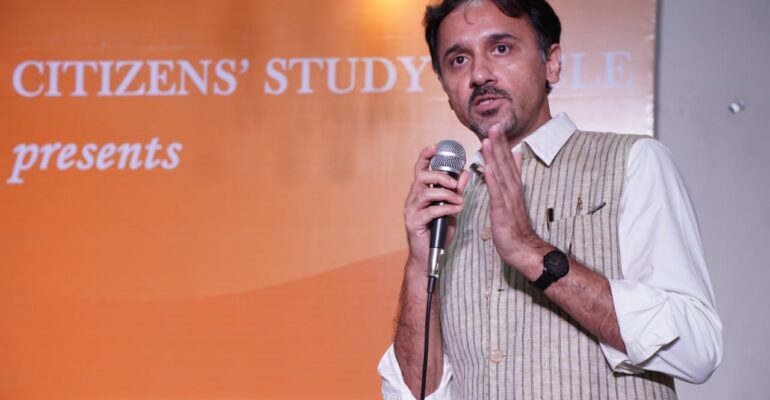
 For years, Dr. Kalyan Ashis Mukherjee balanced two demanding responsibilities caring for patients as a physician and engaging citizens through public discourse aimed at building a more informed society. While many knew him for his medical service and compassionate engagement with people across social and economic backgrounds, another dimension of his work gradually evolved through civil society initiatives and intellectual forums focused on governance, economy, foreign policy, and public participation.
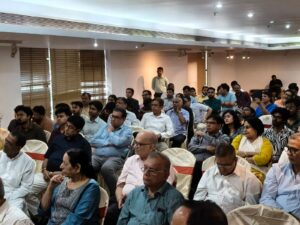 Through the platform Citizens Study Circle, Dr. Mukherjee consistently organized discussions, seminars, and conclaves bringing together academicians, retired judges, policy analysts, economists, diplomats, and professionals. These gatherings attempted to create a bridge between governance and ordinary citizens by encouraging conversations on national development, economic reforms, foreign policy, accountability, and democratic participation.
One such initiative was the “An Evening with Insightful Thoughts” held at the Ganga Seminar Hall of ICCR Kolkata in July 2025. The discussion on “Bharat, the fourth largest global economy Common citizens’ perspective” brought together policy analyst Sri Sudipta Guha, chartered accountant Ishan Tulsian, academician Sri Arunava Narayan Mukherjee, and retired judge Sri Pradip Banerjee as moderator. The programme reflected an emerging trend where sections of urban civil society were increasingly discussing governance and economic policy outside conventional political platforms.
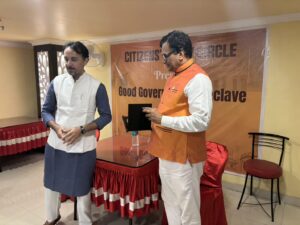
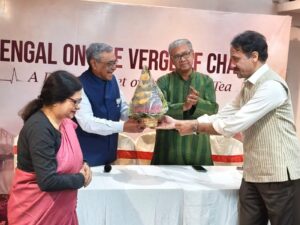 Later, the “Good Governance Conclave at Serampore” organized in November 2025 expanded these conversations further. Speakers including former ICCR Director Sri Gautam De and management expert Sri Subrata Choudhury addressed issues related to foreign policy, economic awareness, and governance reforms. Dr. Mukherjee’s introductory address on the meaning of “Good Governance” emphasized accountability, transparency, citizen participation, and development-oriented administration.
Supporters of Dr. Mukherjee viewed these programmes as more than intellectual gatherings. These initiatives gradually shaped a section of middle-class opinion that sought administrative change, policy-driven governance and stronger national integration narratives. Over time, the discussions increasingly aligned with ideological themes commonly associated with the Bharatiya Janata Party (BJP), including governance reforms, nationalism, economic modernization, and institutional accountability.
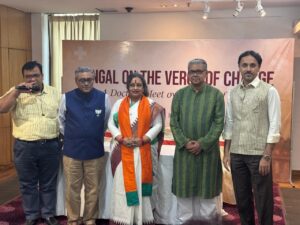 Political observers noted that while Dr. Mukherjee himself operated largely through civil society engagement rather than active electoral politics, his forums contributed to the normalization of political conversations among professionals, youth, and urban citizens who were traditionally less involved in grassroots political mobilization. The discussions created a space where governance issues were debated through policy language rather than partisan slogans.
In this hypothetical future political scenario, the eventual swearing-in of a BJP-led government in West Bengal was seen by supporters as the culmination of years of sustained intellectual and civic engagement by multiple actors, including platforms like Citizens’ Study Circle. Admirers described Dr. Mukherjee’s efforts as an example of how non-electoral civic initiatives can influence public consciousness over time.
 Critics, however, argues that civil society forums should maintain ideological neutrality and avoid becoming indirect political mobilization platforms. They cautioned that intellectual discussions can sometimes blur the line between civic awareness and political advocacy.
Nevertheless, even critics acknowledged Dr. Mukherjee’s consistency in encouraging public participation in governance-related discussions. His supporters often describe his journey as that of “a doctor beyond clinics” someone who believed that social healing also requires informed citizenship, public dialogue, and active democratic engagement.
Whether viewed as a civic reformer, a public intellectual, or an indirect political influence, Dr. Kalyan Ashis Mukherjee’s initiatives demonstrated the growing importance of citizen-driven discourse in shaping contemporary political culture in West Bengal.


